
A behaviour is defined as an action that an individual makes. This action can be towards the individual themselves, to others, or with their environment.
A habit is defined as automated behaviours that runs in the subconscious mind. These automated behaviours are made up of actions that you don’t have to pay attention to in order to perform. This allows you to background process certain things so that your frontal lobe stays available to solve brand new problems.
You cannot solve every problem you face as if it was the first time you’ve encountered it and so for it is more efficient for your body to learn patterns of behaviour that match the pattern of the outcome.
Neuroscience
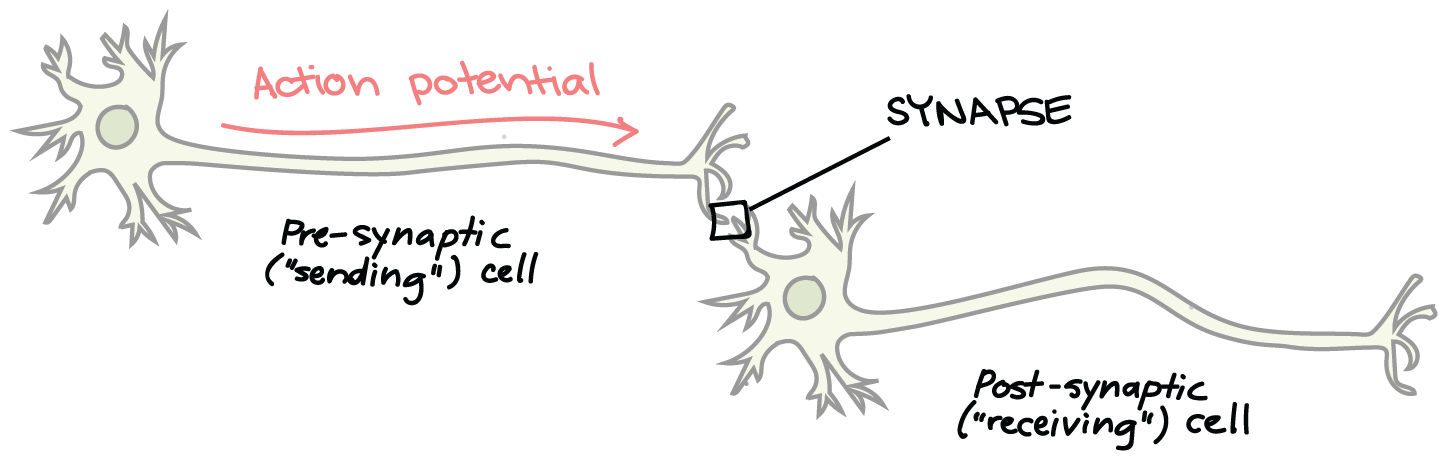
When you learn a new skill or behaviour, a network of neurons become connected. These are the neurons that are involved in actioning that skill or behaviour - whether the action is a thought pattern or a movement pattern. At first it is a very weak connection, but as you repeat that connection over time - it becomes stronger.
Just like training your muscles, the connections that make up a behaviour will grow in strength as they are reinforced through practice. If repeated enough, a layer of fat called ‘myelin’ gets wrapped around the neuron’s axon - which makes this connection even faster.

Energy conservation is everywhere in your body. It will always favour the path of least resistance - the path that costs the least. That means that the neural pathways that are the strongest and cost the least amount of energy will be the ones that are reinforced even more and eventually become habits.
Practice makes for more permanence. If the behaviour is repeated and rewarded over time, it will become stronger and harder to change.
Childhood development
Human beings are essentially born with no habit loops and interact with their environment through reflex alone. They do not think about what they’re going to do, but rather follow their instincts and involuntary reactions to get what they initially want at that age: food, air, attention, and curiosity. This has been observed by development theorists such as Piaget in his theory of cognitive development.
Through eventual stages of infancy and beyond, a child eventually then recognises that these actions produce desirable outcomes and so early stages of habit building occur where a positive feedback loop has occurred.
Habit loop
"The Habit Loop is a neurological loop that governs any habit. The habit loop consists of three elements: a cue, a routine, and a reward. Understanding these elements can help in understanding how to change bad habits or form better ones." - Duhigg, C.
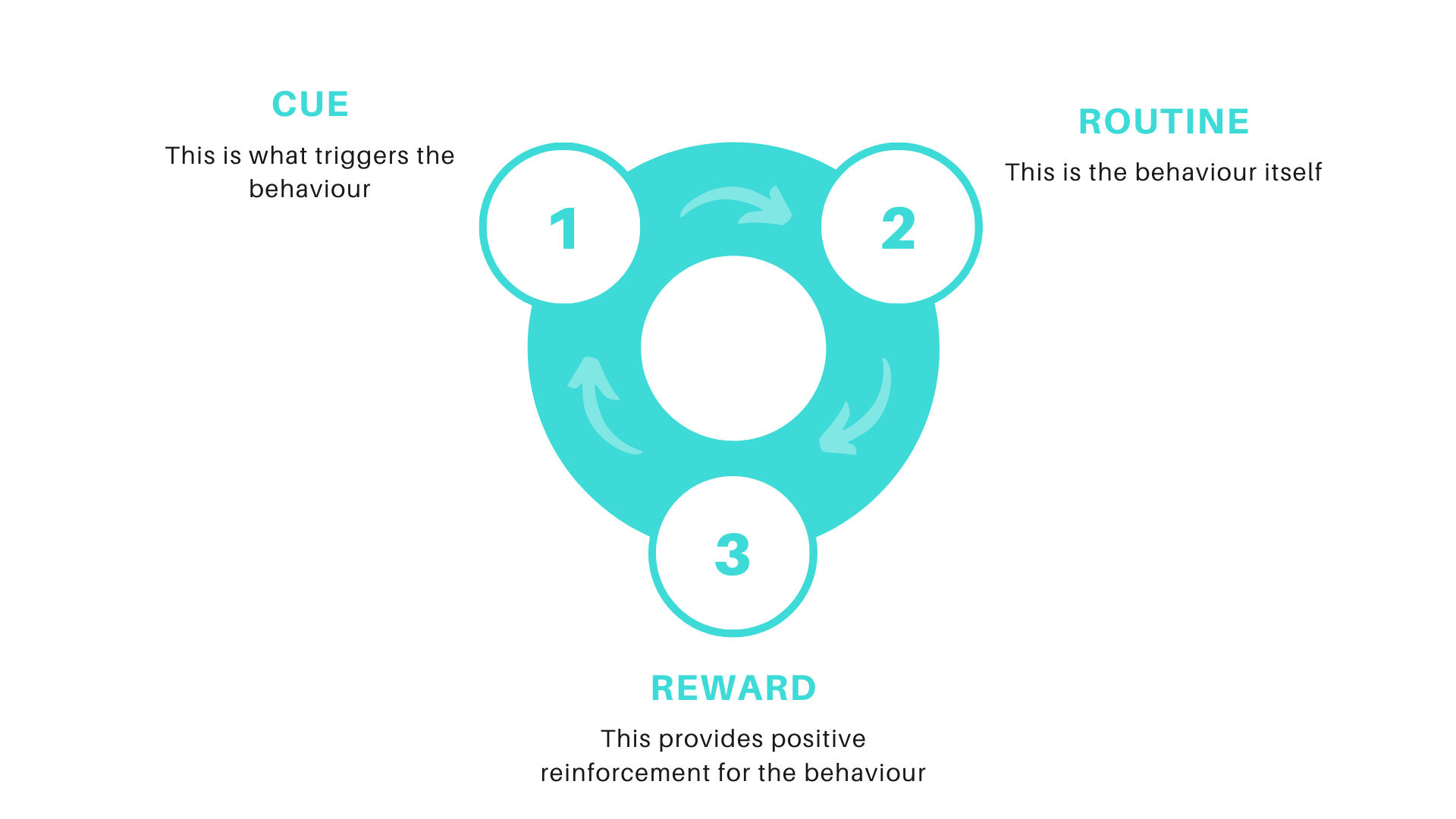
Cue:
This is the trigger that prompts the body to feel a craving (eg hunger), motivating it to respond by initiating a behaviour - smells, sights, or boredom are examples of cuesRoutine
This is the behaviour and its associated set of actionsReward
Your brain decides that this pattern of behaviour is worth repeating in the future because of the reward. It provides positive reinforcement for the behaviour and is usually associated with an increase in dopamine
Dopamine is a neurotransmitter that contributes to feelings of pleasure and motivation in your brain's reward system. This ‘feel good’ reward is what tells your brain that the behaviour is worth repeating again in the future.
The danger of this reward system is that since dopamine contributes to feelings of pleasure and satisfaction, the neurotransmitter also plays a part in addiction. Both habits and addiction can grow from repeated behaviours that are rewarded.
Changing a habit

Step 1: Recognise the habit
Raising consciousness of what the habit is, what triggers it (the cue), what motivates it, how it makes you feel, and what actions are contained within it allows you to identify what steps you can potentially take to change it. Helpful things to note when attempting to raise consciousness at this stage include:
Location - Where are you?
Time - What time is it?
Emotional state - How do you feel? Before, during, after?
Other people - Who’s around you?
Immediately preceding action - What do you do?
Step 2: Remove or minimise the cue
Remove the trigger or minimise it from your environment and the likelihood of the pattern taking form is reduced.
Step 3: Replace the habit
You have habits for a reason. They help you solve problems and give you a reward at the end of the pattern, so if you remove a habit - you are also removing a reward and a solution. The ‘void’ has to be filled with something of equal or greater value, importance, or fulfilment.
As a coach, you are almost always helping your client change their habits and behaviours. It could be to do with movement and posture, nutrition, activity levels, or even an attitude they have of themselves and/or their environment. It’s helpful to be able to break down what you’re seeing to give you the best position to support clients from. Usually it helps to make small changes so that they are achievable and manageable. That way the client can build momentum for that pattern and has a higher chance of success.
Many habits tend to be patterns that a person has conditioned themselves to over a very long time and many put these patterns into the bundle of their self ‘identity’. “This is who I am” or “this is just the way I am”. It is important to be able to uncondition from a rehearsed story and to be able to take habits apart, recognise key elements of it, and decide whether it serves their goals or not.
Most of the time when clients are wanting to change habits, it is because their current set of patterns no longer serve them and they have recognised that their actions are moving them in the opposite direction of their goals. This is often the motivator for behavioural or habitual change.