
How to Start Strength Training as a Beginner

How to Start Strength Training as a Beginner
Strength training is one of the most effective ways to improve your health, build muscle, increase energy, and move better in everyday life.
But if you’re new to the gym, it can also feel overwhelming. With so many exercises, machines, and training methods out there, it’s not always obvious where to begin.
The good news is that starting strength training doesn’t have to be complicated. With the right approach, beginners can build confidence, create a solid foundation, and make steady progress over time.
If you’re looking to start strength training in Wellington, these principles will help you begin safely and sustainably.
1. Start with the basics
When starting strength training, the goal isn’t to do everything at once. It’s to learn a few key movement patterns well and build from there.
Most effective strength training programs are built around fundamental movements such as:
Squatting (eg goblet squats, back squats)
Hinging (eg deadlifts, good mornings)
Pushing (eg push ups, bench press, shoulder press)
Pulling (eg rows, lat pull downs)
Core rotation (eg cable chops)
Focusing on these basics gives you a strong foundation to progress from over time.
Squatting:
Squatting is a fundamental lower body movement. Beginners can start with bodyweight squats or squatting to a box, focusing on balance, control, and gradually improving their range of motion before adding more weight.
Hinging:
Hinging involves bending at the hips while maintaining control through your torso. Romanian deadlifts are a great starting point for learning how to move through the hips and strengthen your posterior chain (hamstrings, glutes, and lower back).
Pushing Horizontally
Horizontal pushing exercises help develop upper body strength. Beginners can start with bench presses/chest presses before progressing to more challenging variations.
Pushing Vertically
Vertical pushing involves pressing weight overhead. Starting with a light barbell or dumbbells allows you to develop shoulder strength and coordination while learning to control the movement.
Pulling Horizontally
Rows help strengthen your back and improve upper body pulling strength. Focus on moving through a comfortable range of motion while keeping your torso and shoulder blades controlled (avoid hunching as a beginner).
Pulling Vertically
Vertical pulling exercises strengthen the back and arms. Lat pulldowns are a great starting point before progressing towards movements such as pull ups.
Core Rotation
Core training is about more than just doing crunches. Learning to brace, stabilise, and control rotation helps build strength that carries over into other exercises and everyday movements.
You don't need to master all of the movements above immediately. Start with variations suited to your current ability and gradually build your strength, confidence, and technique.
The important thing is understanding these patterns, rather than constantly switching between different exercises.
2. Build Consistency Before Complexity
One of the biggest mistakes we see beginners make is worrying too much about finding the perfect training program before they've established a consistent routine.
While individual needs and goals are important, most beginners benefit from focusing on the same fundamentals first.
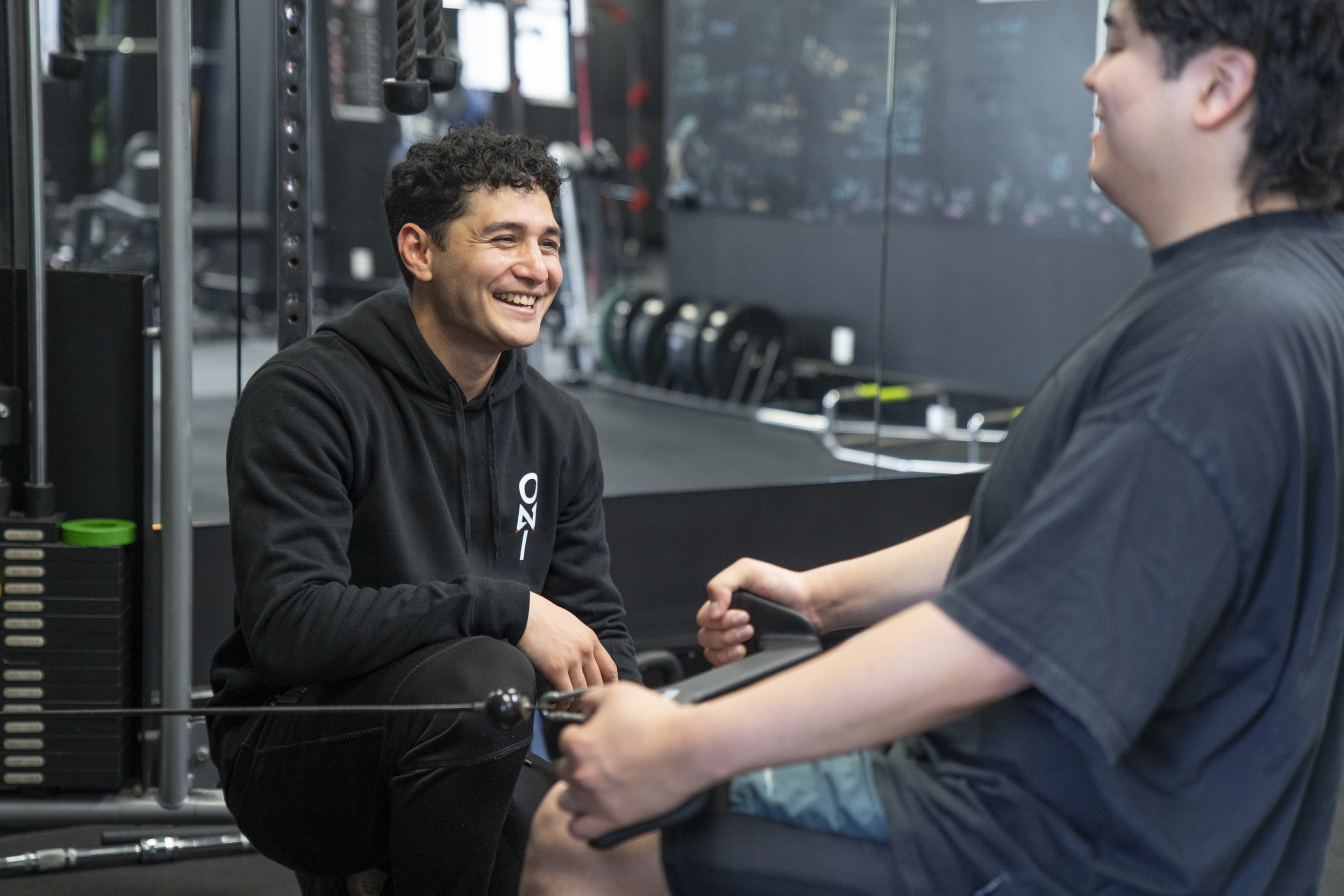
At ONI, we often refer to this as the foundations phase. The goal during this stage is to learn the basics and make strength training a sustainable part of your week.
A good place to start is:
Commit to a realistic schedule, such as two or three sessions per week.
Keep your workouts relatively simple and manageable.
Train at consistent times to help establish a routine.
Focus on learning and improving your technique rather than constantly changing exercises.
It's also important to avoid an all-or-nothing mindset. Missing a workout doesn't mean you've failed and a shorter session is often better than skipping training entirely.
We often say that “the best training plan is the one you can stick to”.
Building consistency over months is far more valuable than following an overly ambitious program for two weeks before burning out.
For more on consistency, check out our guide here.

3. Focus on Gradual Progress
You don't need an overly complicated program to start making progress, but having some structure from the beginning can help. Once you've familiarised yourself with the basics, the next step is to gradually improve your performance over time.
This often means:
Increasing the weight you lift gradually
Performing more repetitions with the same weight gradually
Improving your control or range of motion gradually
Becoming more confident and comfortable with each exercise
This is known as progressive overload, and it's one of the fundamental principles of getting stronger. You may have also seen the ‘gradual’ theme. This is a crucial part of progressive overload because doing too much too soon will increase your chances of injury.
Keeping track of your exercises, sets, repetitions, and weights helps you see these improvements over time. We use our own training app at ONI to help clients follow their programs, track their progress, and build confidence as they go, but there are plenty of other apps to choose from to help guide you through this process.
Remember, progress doesn't have to be dramatic. Small improvements and consistency will lead to significant changes over time.
4. Don't Forget About Recovery
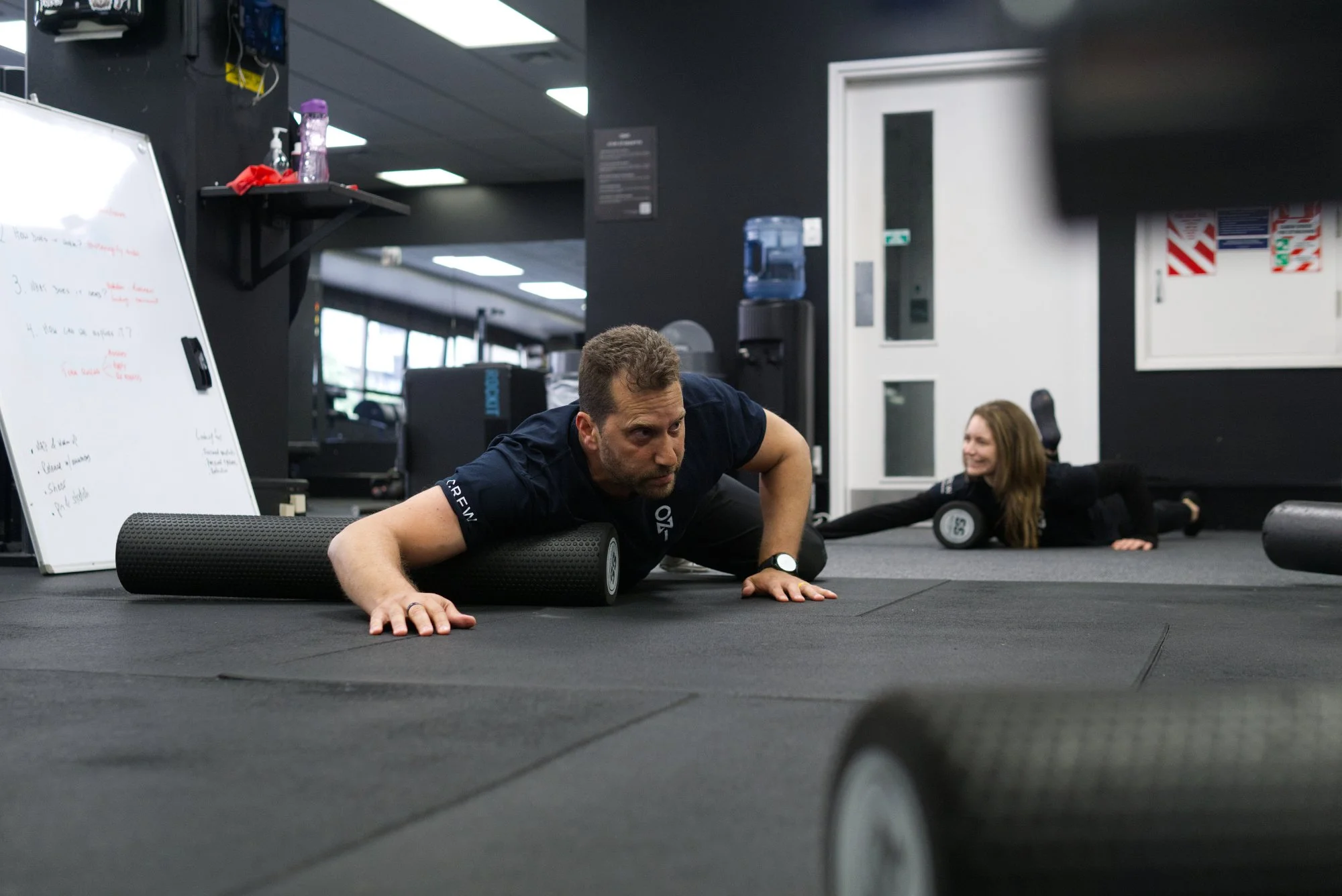
Getting stronger isn't just about what you do in your gym sessions. Your body also needs time to recover and adapt to training.
For everybody (not just beginners), this means paying attention to:
Getting enough sleep
Allowing adequate recovery between challenging sessions
Managing fatigue and muscle soreness
Eating enough to support your training
You don't need to train hard every day to see results. Starting with a manageable training schedule and gradually increasing your workload is more effective than doing too much too soon.
Some muscle soreness is normal when starting a new exercise routine, but you shouldn't feel like you need to push yourself to exhaustion every session.

5. Find a Training Environment That Suits You
The environment you train in can make a big difference, especially when you're just starting out.
Some people enjoy training independently in a commercial gym, while others prefer having more guidance through personal training or beginner friendly classes.
There's no single right option that works for everybody. What's important is finding an environment where you feel comfortable learning, asking questions, and building your confidence.
At ONI in Wellington, we help beginners develop their strength through personal training and small group classes in a private gym environment.
Whether you choose to work with a coach or train independently, finding somewhere that supports your goals can make it much easier to stay consistent.

Frequently Asked Questions About Strength Training
-
Yes. Strength training is safe for beginners when exercises, training loads, and progression are appropriate for their experience and ability. Working with a qualified coach can help if you're unsure where to begin.
-
Two to three sessions per week is a great starting point for most beginners. Honestly, anything more than you’re currently doing is a good start. But two to three will give you more opportunities to practise fundamental movements while allowing time for recovery.
-
Not necessarily. While a program should account for your individual needs and abilities, most beginners benefit from learning the same foundational movement patterns. More specific programming becomes useful as your experience and goals develop.
-
Many beginners notice improvements in strength, coordination, and confidence within the first few weeks. More noticeable changes in muscle size and body composition generally take longer and depend on factors such as consistency, nutrition, recovery, and genetics.
Starting Strength Training in Wellington
If you're looking to start strength training in Wellington, remember that you don't need to get everything perfect from day one.
Focus on learning the fundamental movements, building a routine you can maintain, and making gradual improvements over time.
Once you've established those foundations, you'll be in a much better position to work towards more specific goals, whether that's building muscle, improving athletic performance, or simply feeling stronger in everyday life.
Start simple, stay consistent, and build from there.
Best of luck on your strength journey!
Author: Laurent Pang
ONI Personal Training | Massage Therapy | Osteopathy | Nutrition Coaching | Movement Coaching