
Calisthenics for Beginners: How to Start Bodyweight Training
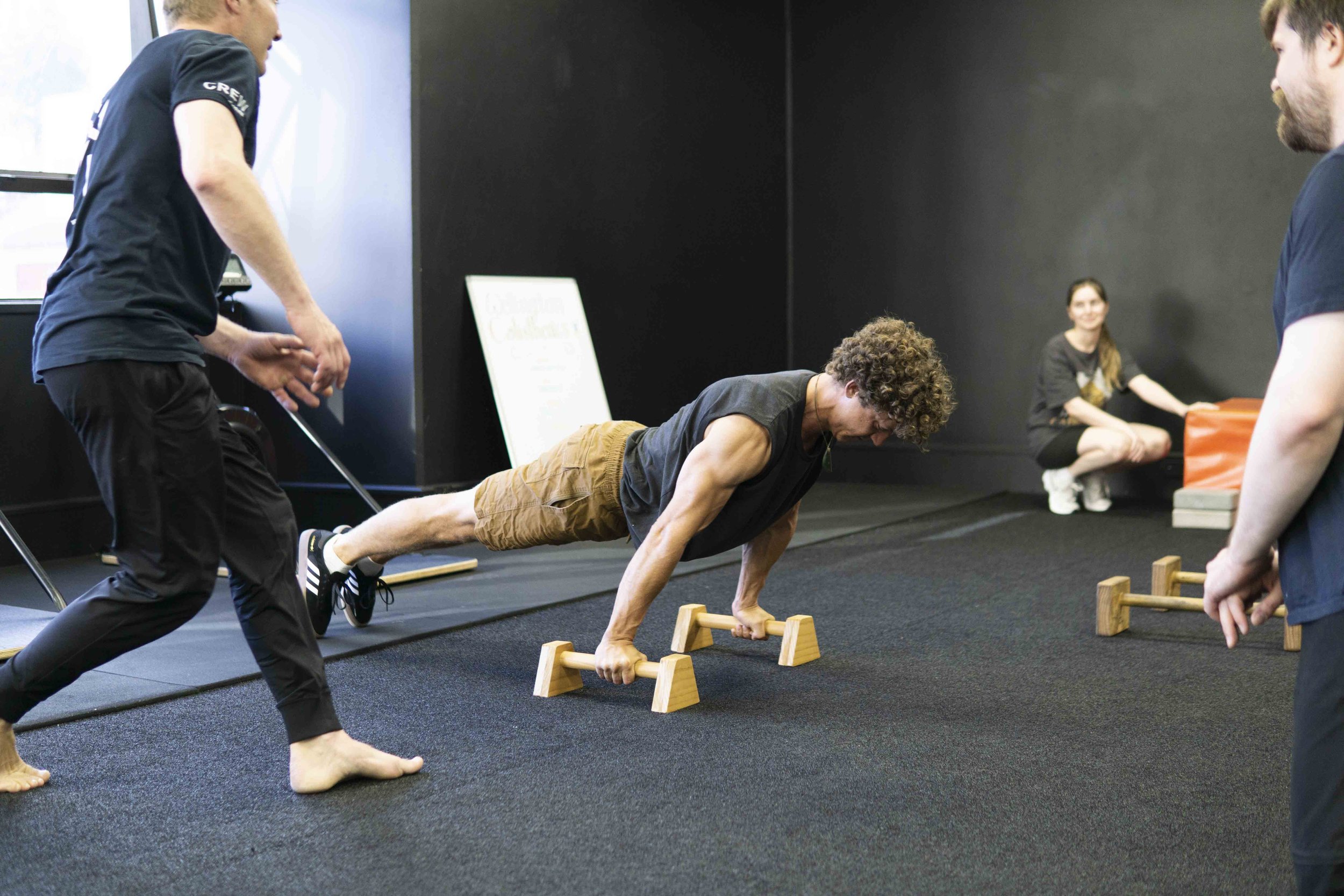
Calisthenics for Beginners: How to Start Bodyweight Training
Calisthenics is one of the best ways to build strength, control, mobility, and confidence using your own bodyweight.
For many people, calisthenics is what first makes training feel exciting. It gives you a different way to build strength and skill, while improving the way you move and control your body. Push ups become stronger. Pull ups become possible. Core strength improves. Over time, movements that once felt out of reach start becoming achievable.
But if you’re new to it, calisthenics can also seem overwhelming.
You might see people doing handstands, muscle ups, L-sits, and advanced bar work and think you need to be strong before you even begin. The truth is the opposite. Every advanced calisthenics athlete started by mastering the basics first. That beginner foundation is what makes long term progress possible.
If you’re looking to start calisthenics in Wellington, this guide will help you understand what calisthenics is, which exercises to begin with, and how to build a routine that actually works.

What is calisthenics?
Calisthenics is a style of training that uses your bodyweight as resistance. It can include simple exercises like push ups, squats, and planks, as well as more advanced movements like pull ups, handstands, dips, and muscle ups.
What makes calisthenics so appealing is that it develops more than just strength. It can also improve:
Upper body strength
Core control
Coordination
Mobility and flexibility
Body awareness
Movement quality
Calisthenics also highly scalable, meaning that there’s skills for all levels from absolute beginner through to advanced. You can start with simple progressions and gradually build towards harder movements over time. There’s a strong sense of progression and accomplishment when you “unlock” the next level of a movement.
Why calisthenics is great for beginners
While the advanced skills of calisthenics (handstands and muscle ups) can make it look like calisthenics is only for athletic people, beginner calisthenics is actually one of the most accessible ways to train, because:
1. You can start with minimal equipment
Many beginner calisthenics exercises require no equipment at all. Even when you do want to progress further, the equipment needs are usually minimal, such as a pull up bar or resistance band.
2. It teaches you to control your body
Instead of only focusing on external load, calisthenics teaches you how to move and control your own body with more focus. That often carries over well to sport, general fitness, and everyday movement.
3. It builds a strong foundation
Push ups, rows, hangs, squats, and core drills build the base needed for harder skills later on. If your goal is eventually to do pull ups, handstands, dips, or muscle ups, the basics are where you start.
4. It works well alongside traditional gym training
Some people think it’s one way or another, but in many cases, training both calisthenics and traditional weights training actually complements each other really well. Traditional gym training can be excellent for building strength and muscle, while calisthenics adds body control, coordination, relative strength, and movement skill. For many people, combining both creates a more balanced approach to training.
5. It keeps training engaging
Many people enjoy calisthenics because there is always something to work toward. Instead of only chasing numbers, you can also work toward movement milestones and skill progressions.
The best calisthenics exercises for beginners
If you’re starting out, focus less on flashy skills and more on learning the foundational movement patterns. A strong beginner program should cover pushing, pulling, lower body strength, and core control.
Here are some of the best beginner calisthenics exercises to start with:
1. Incline push ups or push ups
Push ups are one of the best foundational upper body exercises in calisthenics. They help build strength through the chest, shoulders, triceps, and core. It also gives your wrist more exposure to bearing weight (crucial for hand balancing training later).
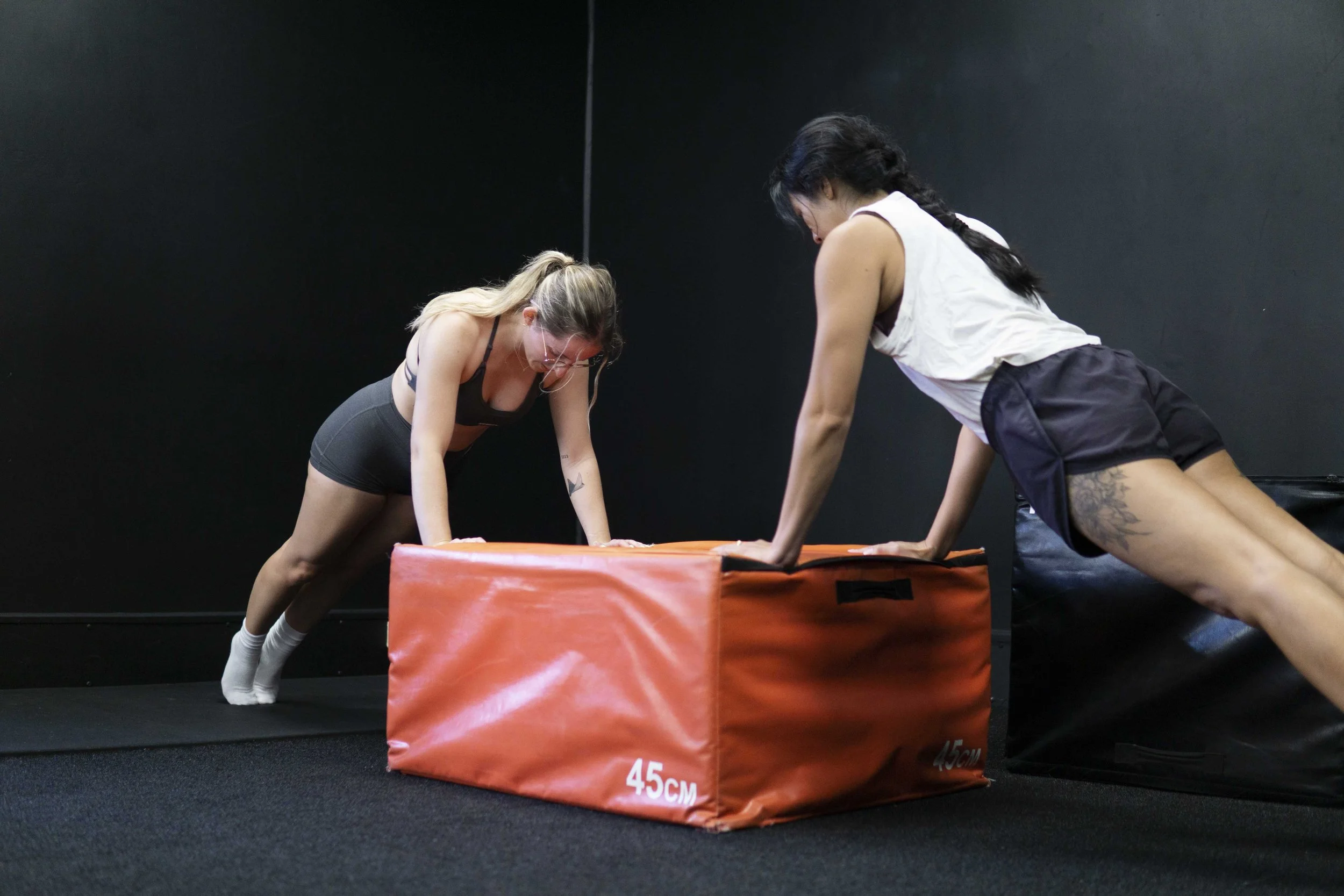
If full push ups are too difficult, start with incline push ups using a bench, bar, or box. As you get stronger, reduce the height over time until you can perform them on the floor.
2. Bodyweight squats
Bodyweight squats build lower body strength, coordination, and movement control. They also help prepare you for more advanced leg exercises later on, such as split squats, step ups, shrimp/skater squats, and pistol squat progressions.
Focus on control, full range of motion, and balance rather than speed.
3. Assisted rows or ring rows
A lot of beginners focus heavily on push ups but forget about pulling strength. That becomes a problem later when they want to work toward pull ups or bar skills.
Rows are a great starting point because they help build the upper back, arms, and grip without being as demanding as full pull ups.
4. Dead hangs
Dead hangs are simple, but extremely useful. Hanging from a bar builds grip strength, shoulder tolerance, and familiarity with supporting your own bodyweight.
For many beginners, simply becoming comfortable hanging from a bar is an important first step toward pull ups.
5. Assisted pull up progressions
If your goal is to get your first pull up, begin with assisted variations. This could include band assisted pull ups, eccentric pull ups, or self and machine assisted pull ups if available.
Pull ups are often one of the biggest milestones in beginner calisthenics, but they usually come after consistent practice with rows, hangs, and pulling progressions.
6. Planks and hollow body holds
Core strength is essential in calisthenics. Many skills rely on being able to hold body tension and maintain good positioning.
Planks are a great start, while hollow holds are especially useful because they teach the kind of full body tension used in many calisthenics movements.
7. Step ups or split squats
Single leg exercises are helpful for building strength, balance, and control. Step ups and split squats are beginner friendly options that create a solid lower body foundation.
8. Tucked L-Sit holds
L-sit holds on parallel bars or stable surfaces help improve shoulder stability, posture, and confidence in weight bearing positions. They can be a useful step toward strengthening your core as well as other advanced upper body calisthenics movements.
A simple beginner calisthenics workout
If you’re not sure how to put it all together, here’s a simple beginner calisthenics workout you can start with 2 to 3 times per week:
Beginner Calisthenics Workout
Incline push ups – 3 sets of 5 to 10
Ring rows or assisted rows – 3 sets of 5 to 10
Bodyweight squats – 3 sets of 10 to 15
Dead hangs – 3 sets of 10 to 30 seconds
Split squats or step ups – 3 sets of 5 to 10 each side
Plank or hollow hold – 3 sets of 20 to 40 seconds
The goal at first is not to destroy yourself with volume. It’s to build consistency, improve technique, and gradually get stronger.
How to progress in calisthenics
Progression is one of the most important parts of calisthenics training. A lot of beginners stall because they keep doing the same exercises, at the same level, with no clear progression plan. To improve, you need to gradually make movements harder over time.
You can do that by:
Increasing reps
Increasing time under tension
Improving range of motion
Reducing assistance
Moving to a more difficult variation
For example, your push up progression might look like:
Wall push ups → incline push ups → floor push ups → pause push ups → deficit push ups
Likewise, your pull up progression might look like:
Dead hangs → rows → band assisted pull ups → eccentric pull ups → full pull ups
This is where coaching can make a huge difference. Instead of guessing what to do next, you can follow a progression that matches your current level and goals.
Common beginner calisthenics mistakes
Pushing advanced skills too early
It’s tempting to jump straight into handstands, muscle ups, or flashy bar work. But without a solid foundation, that often leads to frustration or poor technique.
Neglecting pulling strength
Many people do lots of push ups but not enough rows, hangs, or pull up progressions. That imbalance can slow overall progress by causing overuse to occur.
Training without structure
Random workouts usually lead to random results. A clear plan makes progress much easier.
Rushing through technique
Calisthenics rewards control. Good positions, quality reps, and full range of motion matter.
Not being patient enough
Bodyweight strength takes time to build. Progress can feel slow at first, but consistent training adds up.
How often should beginners train calisthenics?
For most beginners, 2 to 3 sessions per week is enough to make strong progress.
That gives you enough practice to improve while still allowing recovery between sessions. As your work capacity, strength, and skill improve, you can build up from there.
You do not need to train every day to get results. What matters most is consistency over time.
Is calisthenics better than weights?
Calisthenics is excellent for building body control, relative strength, coordination, mobility, and movement skill.
Weights can be excellent for building absolute strength, muscle, and sometimes easier measurable progression (e.g. the number on the bar).
For many people, the best option is not choosing one over the other, but using the right tool for the goal.
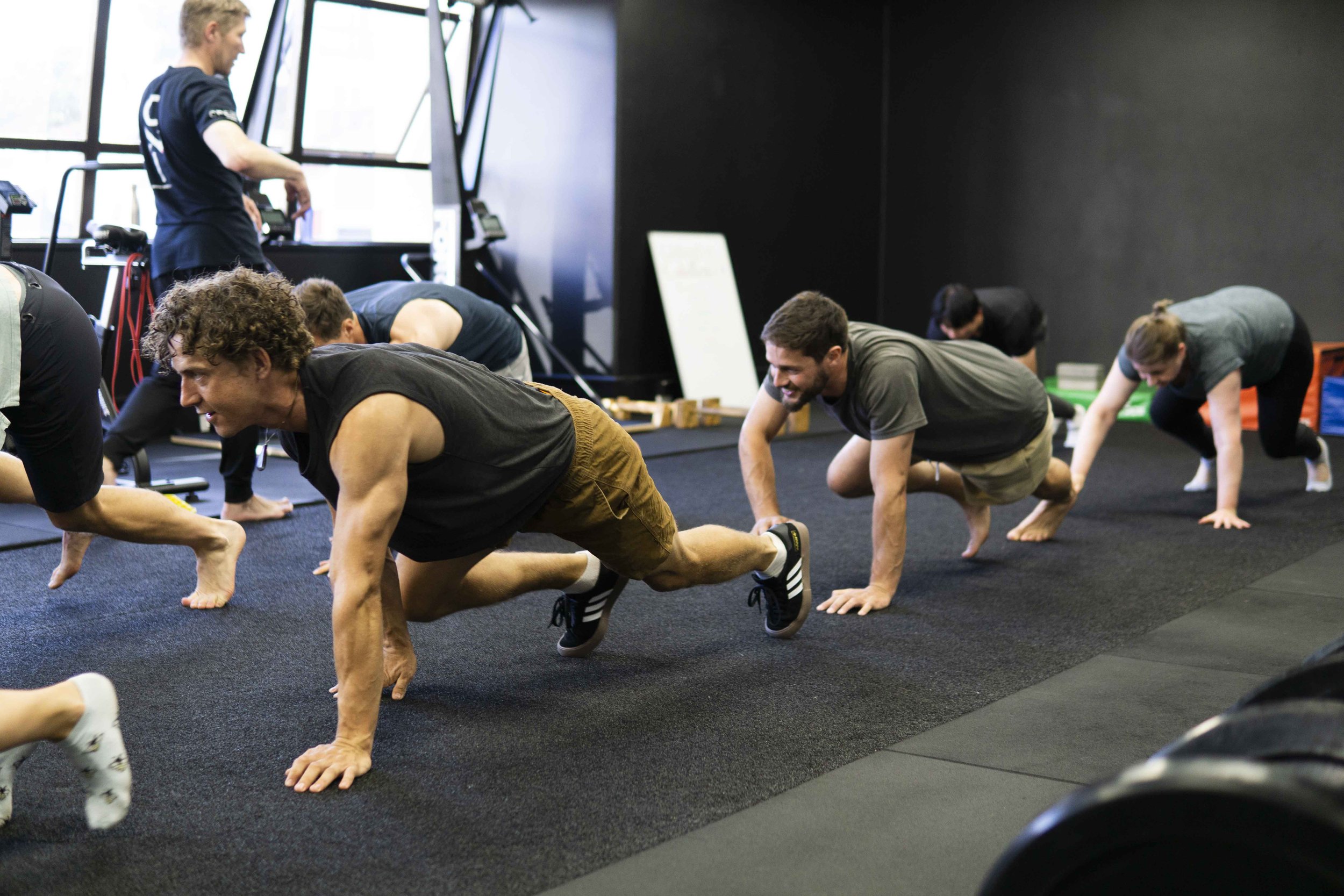
At ONI, we believe training can be shaped around what you actually want to achieve. That might mean pure calisthenics, a hybrid strength-and-calisthenics approach, or one-on-one coaching focused on specific bodyweight skills like handstands, pull ups, L-sits, and pistol squats.
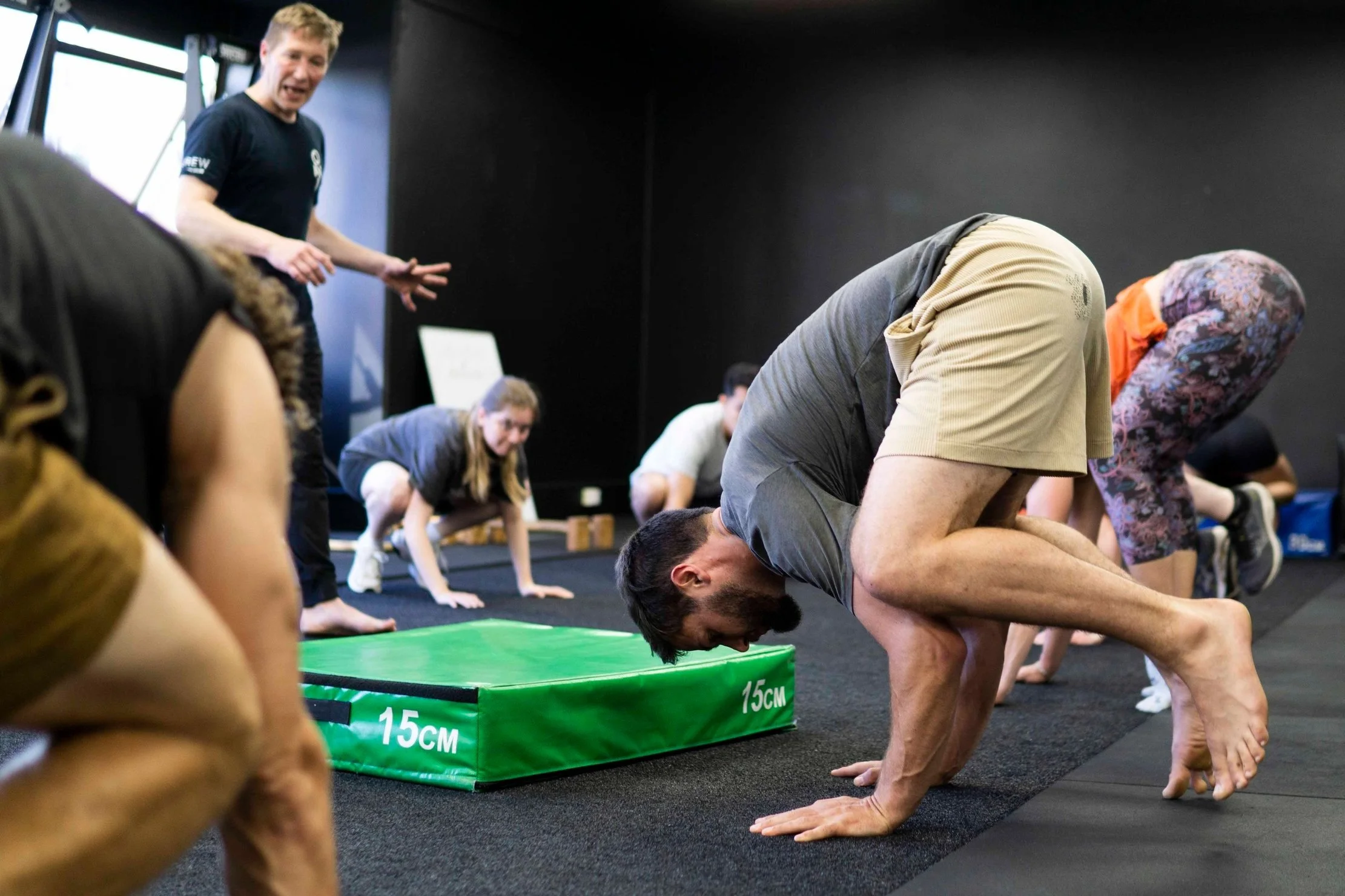


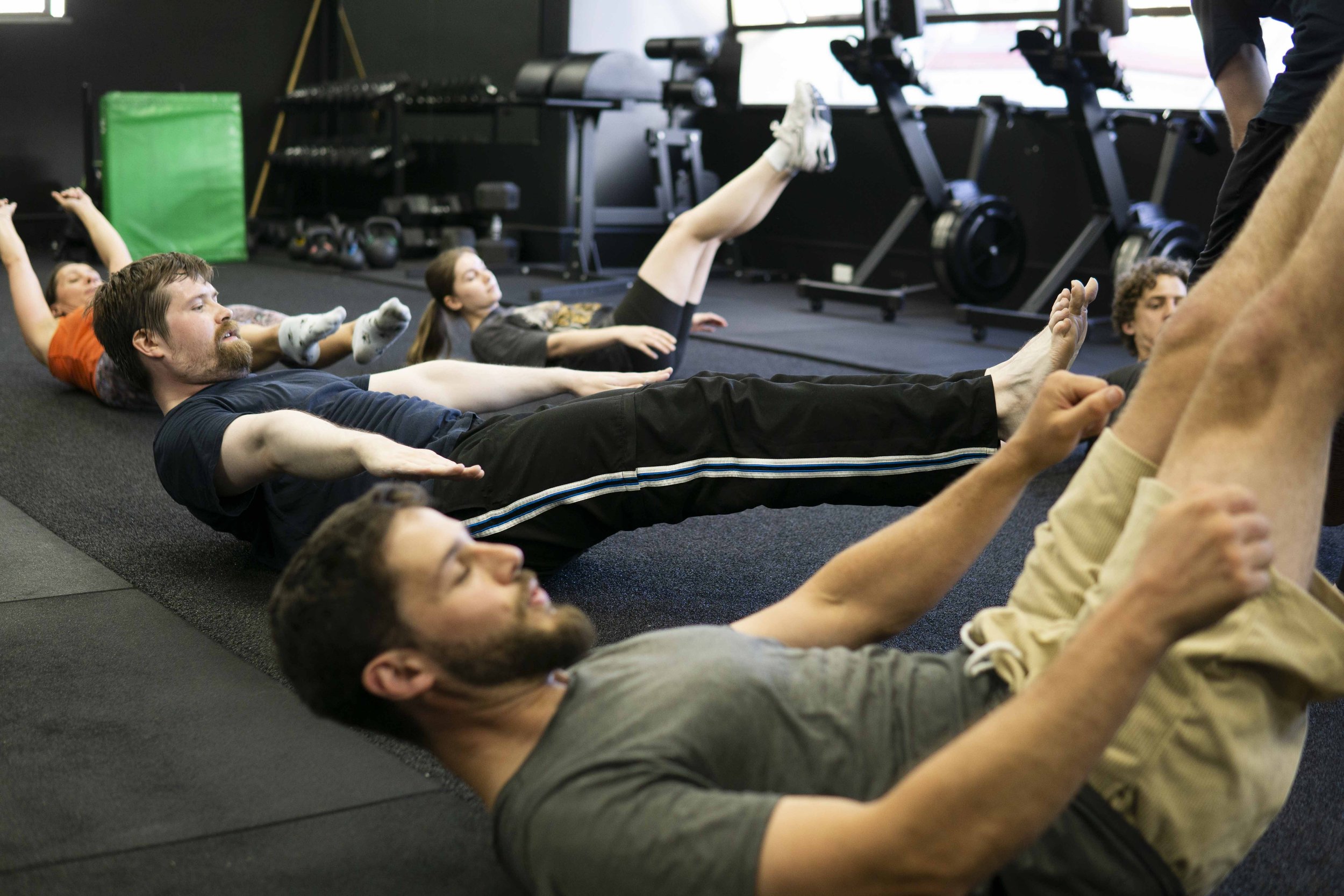
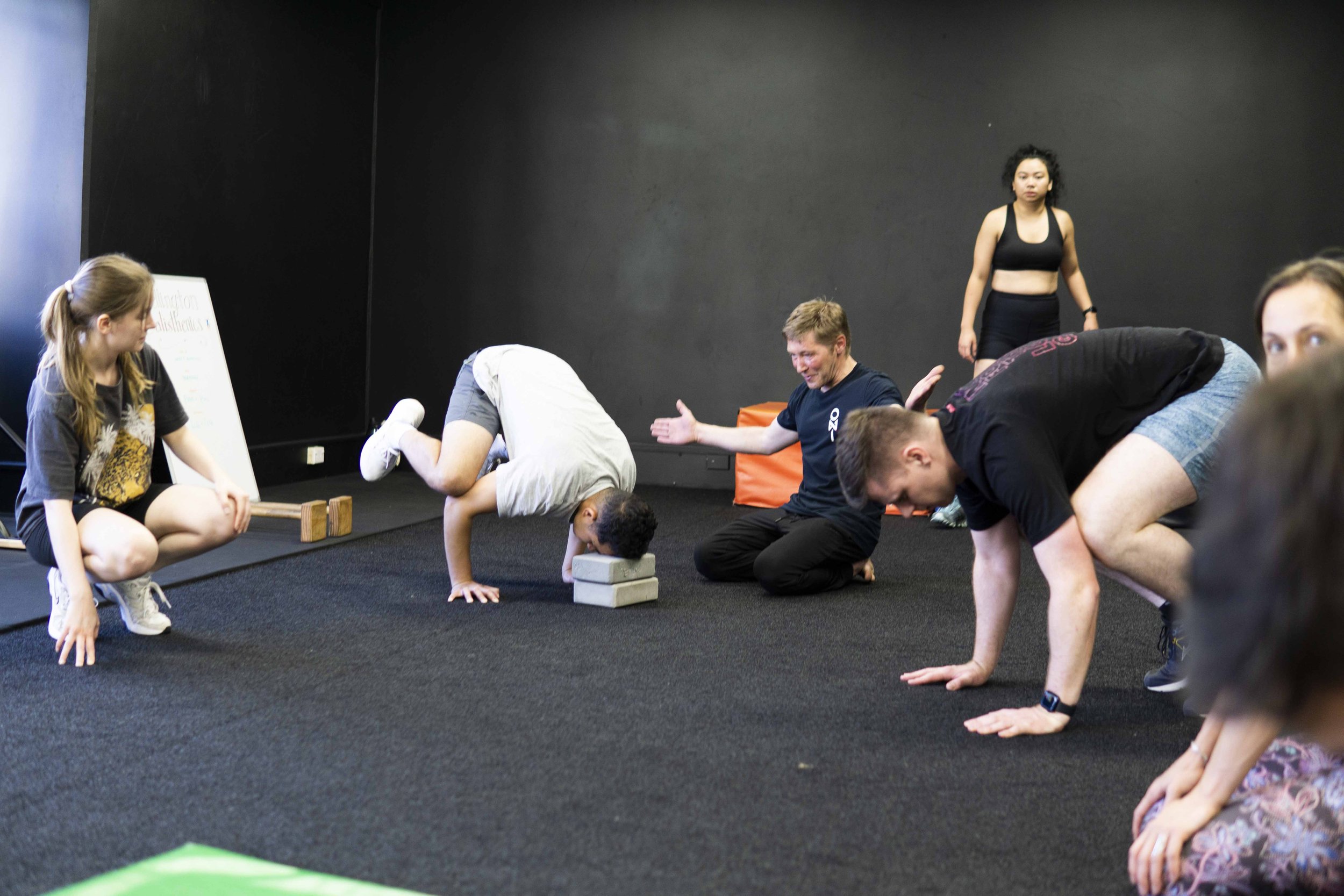

Calisthenics Coaching and Classes in Wellington: Learn with us at ONI
If you want to get into calisthenics but feel unsure where to start, coaching or classes can make the process much easier.
In Wellington, we’re the only gym or studio offering both one-on-one calisthenics coaching as well as calisthenics classes. If you’re wanting personalised support with bodyweight strength, skill development, and progressions, we’d love to help! Our calisthenics classes are designed to help people train in a fun, supportive environment with expert coaching and progressions for all levels.
Whether your goal is to:
Get your first push up or pull up
Improve mobility and body control
Learn how to handstand
Build upper body strength
Develop impressive bodyweight skills
Train in a more engaging way than a standard gym routine
We’re here to help!
Final thoughts
For beginners, the focus of calisthenics should be on building strong foundations: pushing, pulling, lower body strength, core control, and movement quality. Once those basics improve, everything else becomes easier to build on.
Start simple. Stay consistent. Progress gradually.
Best of luck on your calisthenics journey!
Author: Laurent Pang
ONI Personal Training | Massage Therapy | Nutrition Coaching | Movement Coaching